Reshaping the nasal bones has traditionally required the use of manual instruments such as rasps and osteotomes — tools that, while effective, can cause significant trauma to surrounding tissues. Ultrasonic rhinoplasty represents a transformative advancement in nose surgery, using piezoelectric technology to sculpt bone with extraordinary precision while leaving the delicate soft tissues virtually untouched. The result is more controlled reshaping, reduced bruising and swelling, and a faster, more comfortable recovery.
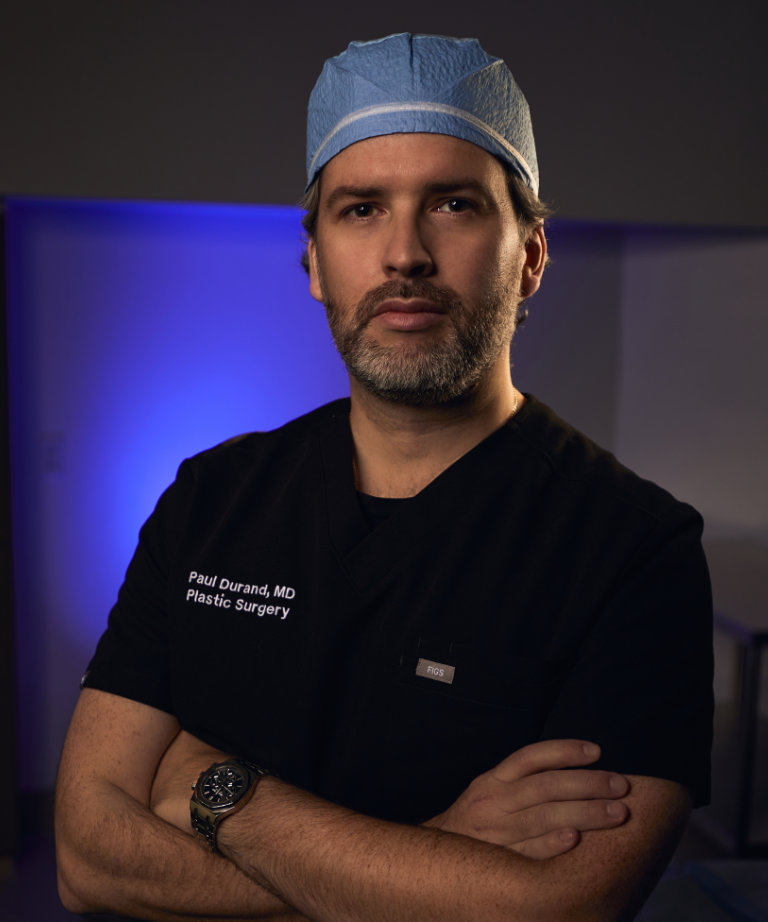
Dr. Paul Durand is a board-certified plastic surgeon who brings advanced training and refined technique to ultrasonic rhinoplasty in Miami. Fellowship-trained at both the Cleveland Clinic — where he participated in the first face transplant performed in the United States — and the Dallas Plastic Surgery Institute under Dr. Rod Rohrich, a world-renowned authority in rhinoplasty, Dr. Durand combines cutting-edge technology with the artistic sensibility necessary to achieve natural, harmonious results.

The Science Behind Piezoelectric Nose Surgery
“Ultrasonic rhinoplasty gives me a level of control that simply wasn’t possible with traditional instruments,” explains Dr. Durand. “The piezoelectric device allows me to sculpt bone millimeter by millimeter while completely preserving the surrounding cartilage, blood vessels, and soft tissue. This precision translates directly into better outcomes and easier recoveries for my patients.”
Piezoelectric technology works by converting electrical energy into ultrasonic vibrations. These vibrations are powerful enough to cut through bone but gentle enough to leave soft tissues unharmed. When the ultrasonic tip contacts cartilage, skin, or blood vessels, it simply bounces off without causing damage. This selectivity makes ultrasonic rhinoplasty particularly valuable for patients requiring significant bone work, such as hump reduction or nasal width correction.
What Is Ultrasonic Rhinoplasty?
Ultrasonic rhinoplasty is a surgical technique that uses piezoelectric instruments to reshape the nasal bones during nose surgery. Unlike traditional methods that rely on manual rasps, files, and chisels, the ultrasonic approach employs precisely calibrated vibrations to sculpt bone with exceptional accuracy and minimal collateral trauma.
The procedure is not a separate type of rhinoplasty but rather an advanced method of performing the bone work component of nose surgery. Dr. Durand integrates ultrasonic technology into both primary rhinoplasty and revision rhinoplasty procedures whenever bone modification is required. The technique is particularly beneficial for patients who need dorsal hump reduction, narrowing of wide nasal bones, or correction of asymmetries in the bony vault.
How Piezo Technology Differs from Traditional Techniques
Traditional rhinoplasty bone work involves breaking and repositioning the nasal bones using osteotomes (small chisels) and rasps. While effective, these instruments create more tissue trauma, which leads to increased bruising, swelling, and discomfort during recovery.
Ultrasonic instruments offer several distinct advantages:
- Bone-Selective Cutting: the piezoelectric tip affects only hard tissue, leaving soft tissue structures intact
- Enhanced Precision: surgeons can make exact, controlled modifications rather than relying on fracture patterns
- Reduced Trauma: less damage to blood vessels means significantly less bruising and swelling
- Improved Visibility: minimal bleeding during surgery allows for clearer visualization of anatomical structures
- Smoother Results: the sculpting action creates smoother bone contours without the irregularities that can occur with manual filing
Ideal Candidates for Precision Nose Reshaping
Ultrasonic rhinoplasty is particularly well-suited for patients whose nasal concerns involve the bony structures of the nose. Dr. Durand frequently recommends this approach for patients presenting with:
- Dorsal Hump: a prominent bump on the nasal bridge composed of bone and cartilage that disrupts the profile
- Wide Nasal Bones: a broad bony vault that makes the nose appear too wide for the face
- Crooked Nasal Bones: asymmetry or deviation in the upper third of the nose resulting from genetics or prior injury
- Post-Traumatic Deformities: irregularities in the nasal bones following fracture or previous surgery
- Revision Rhinoplasty Needs: patients requiring correction of bony irregularities from a prior rhinoplasty
- Patients Concerned About Recovery: individuals who want to minimize visible bruising and downtime
Patients whose concerns are limited to the nasal tip or cartilaginous structures may not require ultrasonic technology, as these areas do not involve bone work. During your consultation, Dr. Durand will evaluate your anatomy, discuss your goals, and determine whether ultrasonic rhinoplasty is the optimal approach for your procedure.
What to Expect During Ultrasonic Nose Surgery
Ultrasonic rhinoplasty is performed under general anesthesia as an outpatient procedure. The surgery typically takes two to three hours, depending on the complexity of the case and whether additional work on the nasal tip or septum is required.
Dr. Durand typically performs ultrasonic rhinoplasty using an open approach, which involves a small incision across the columella (the tissue between the nostrils) that heals to become virtually invisible. This approach provides optimal visualization and access for precise bone sculpting with the piezoelectric instruments.
During the bone work portion of the procedure, Dr. Durand uses the ultrasonic device to carefully sculpt the nasal bones according to the surgical plan developed during your consultation. The piezoelectric tip allows him to reduce humps, narrow the bony vault, and correct asymmetries with millimeter-level precision. Because the soft tissues remain protected throughout, patients experience significantly less bruising compared to traditional techniques.
Following the bone work, Dr. Durand addresses any cartilaginous concerns, refines the nasal tip as needed, and closes the incisions with fine sutures. A splint is placed on the nose to protect and support the newly shaped structures during the initial healing phase.


Recovery After Piezoelectric Rhinoplasty
One of the most significant benefits of ultrasonic rhinoplasty is the improved recovery experience. Because the piezoelectric instruments cause minimal trauma to blood vessels and soft tissues, patients typically experience dramatically less bruising than with traditional techniques. Many patients report little to no visible bruising around the eyes — a common occurrence after conventional rhinoplasty.
Swelling is also generally reduced, though some degree of swelling is inevitable after any rhinoplasty procedure. The nasal splint is removed after approximately one week, at which point most patients feel comfortable returning to work and social activities. While the nose will continue to refine over the following months, the initial results are often visible earlier than with traditional methods due to the reduced swelling.
Dr. Durand provides detailed postoperative instructions and schedules regular follow-up appointments to monitor healing and ensure optimal results. Most patients can resume light exercise after two weeks and full physical activity after six weeks.
Frequently Asked Questions About Ultrasonic Rhinoplasty
-
Ultrasonic rhinoplasty offers significant advantages when bone work is required, including greater precision, reduced bruising, and faster recovery. However, “better” depends on the individual patient’s needs. Dr. Durand selects the techniques best suited to each patient’s anatomy and goals.
-
The use of advanced piezoelectric technology may involve additional costs compared to traditional techniques. During your consultation, Dr. Durand’s team will provide detailed pricing information based on your specific surgical plan.
-
Yes. Most patients experience significantly less bruising with ultrasonic rhinoplasty compared to traditional methods. Many patients have minimal or no visible bruising around the eyes, which is common after conventional bone work.
-
Absolutely. Ultrasonic rhinoplasty is particularly valuable in revision cases where scar tissue from previous surgery makes traditional techniques more challenging. The precision of piezoelectric instruments allows Dr. Durand to carefully sculpt bone in complex revision scenarios.
-
Yes. Dr. Durand uses ultrasonic technology across all ethnic backgrounds when bone modification is needed. The precision of the technique is especially valuable when subtle adjustments are required to maintain ethnic identity while achieving aesthetic goals.
-
While initial results are visible once the splint is removed, final results develop over twelve to eighteen months as residual swelling resolves. The reduced swelling associated with ultrasonic rhinoplasty often allows patients to appreciate their results somewhat earlier in the healing process.
Why Choose Dr. Durand for Ultrasonic Rhinoplasty
Dr. Durand’s credentials place him among an elite group of surgeons qualified to perform advanced ultrasonic rhinoplasty. His fellowship training at the Dallas Plastic Surgery Institute under Dr. Rod Rohrich — one of the foremost rhinoplasty surgeons in the world — provided him with expertise in the most sophisticated techniques available. His prior training at the Cleveland Clinic, including participation in facial transplant surgery, gave him an unparalleled understanding of nasal anatomy and tissue handling.
Beyond technical expertise, Dr. Durand approaches each rhinoplasty as a collaboration with the patient. He listens carefully to concerns, uses advanced imaging to help patients visualize potential outcomes, and develops customized surgical plans designed to achieve natural, harmonious results that complement each patient’s unique facial features.
Schedule Your Ultrasonic Rhinoplasty Consultation in Miami
Discover how ultrasonic rhinoplasty can help you achieve the precise, natural-looking results you desire with a faster, more comfortable recovery. Contact Dr. Paul Durand Plastic Surgery today to schedule a consultation at his Brickell office in Miami. During your visit, Dr. Durand will evaluate your nasal anatomy, discuss your goals, and explain how advanced piezoelectric technology can be incorporated into your personalized surgical plan.
I’ve been wanting to get rhinoplasty for the longest time, but hadn’t met the right doctor. When my friend recommended Dr. Durand, I was very impressed and touched by his work. After many consultations, we decided surgery was not an option for me, because of health reasons. He then suggested liquid rhinoplasty and explained in detail how it would work. I had it done only two days ago, and I’m beyond happy with the results. My nose looks amazing; it is what I’ve always wanted, and the procedure was quick and pain free. I’m so grateful to Dr. Durand and his staff. I would recommend them in a heartbeat. They are all very sweet, soft spoken, and kind.
Medically reviewed by Paul D. Durand, M.D. on