When a previous facelift has produced unsatisfactory results — whether due to an unnatural appearance, asymmetry, visible scarring, or premature recurrence of aging — a revision facelift can restore balance and achieve the outcome patients originally envisioned. Also known as secondary facelift surgery, this specialized procedure requires advanced technical skill and a deep understanding of altered facial anatomy to correct complications while delivering natural, lasting improvement.
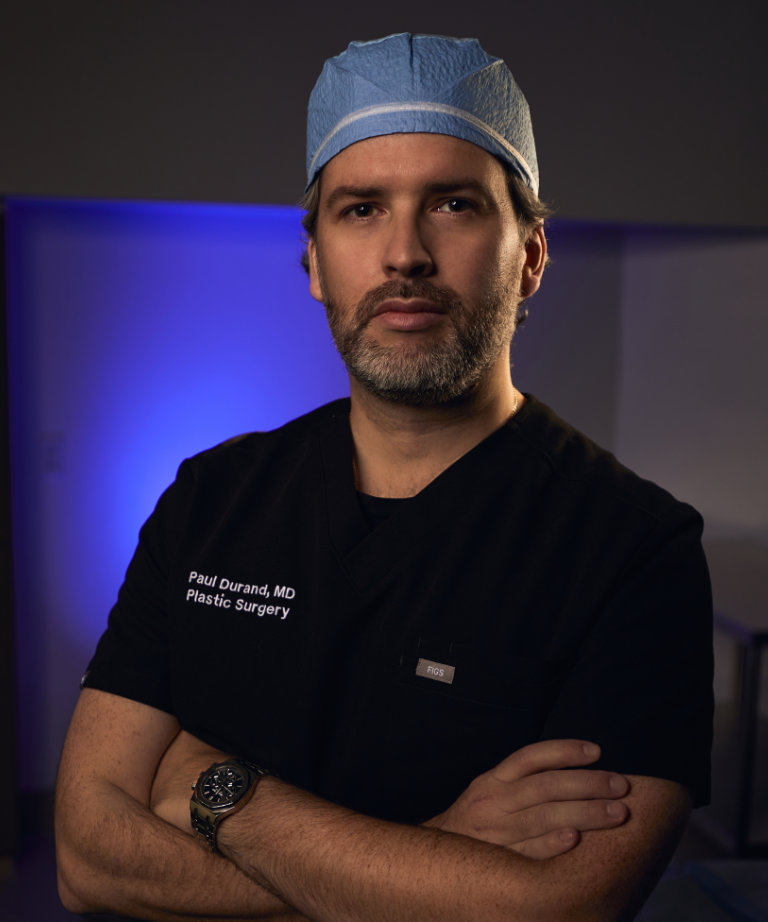
Dr. Paul Durand is a board-certified plastic surgeon whose credentials position him as an ideal choice for complex revision cases. Trained at the Cleveland Clinic — where he participated in the first face transplant in the United States — and fellowship-trained at the Dallas Plastic Surgery Institute, Dr. Durand possesses the anatomical expertise and refined surgical judgment necessary to navigate previously operated tissue and achieve corrective results that look and feel natural.

When Secondary Facelift Surgery Becomes Necessary
“Revision facelift surgery is not about fixing someone else’s mistake — it’s about understanding what happened and creating a better path forward,” explains Dr. Durand. “Every patient presents with unique challenges based on their anatomy, the techniques used previously, and how their tissues have healed. My job is to assess all of these factors and develop a customized plan.”
Patients seek revision facelift for various reasons. Some experienced complications from their initial surgery, while others were simply not good candidates for the technique that was used. In many cases, patients had satisfactory results initially but have experienced natural aging progression and are ready for a secondary procedure. Dr. Durand approaches each revision case with fresh eyes and a commitment to achieving the patient’s aesthetic goals.
What Is a Revision Facelift?
A revision facelift is a secondary surgical procedure performed to correct or improve the results of a prior facelift. This procedure addresses concerns that may have developed after the initial surgery, including persistent laxity, overcorrection, asymmetry, visible scarring, or unnatural contours.
Revision surgery is inherently more complex than primary facelift surgery. Scar tissue from the previous procedure alters the normal tissue planes, and anatomical landmarks may be distorted. Dr. Durand’s extensive experience with complex reconstructive surgery — including facial transplantation — provides him with the skills to navigate these challenges safely and effectively.
Correcting Common Complications from Previous Facelift Surgery
Dr. Durand frequently addresses the following concerns in revision facelift patients:
- Pixie Ear Deformity: distortion of the earlobe caused by excessive tension during the original closure, resulting in an elongated or pulled appearance
- Visible Scarring: hypertrophic or widened scars around the ears or hairline that draw attention to the surgical site
- Hairline Distortion: unnatural displacement of the hairline or temporal hair loss resulting from improper incision placement
- Cobra Neck Deformity: visible banding or central fullness in the neck caused by over-aggressive platysma muscle tightening
- Asymmetry: uneven results between the two sides of the face that create an imbalanced appearance
- Windswept Appearance: an overly pulled or tight look resulting from excessive skin tension rather than proper deep tissue repositioning
- Premature Relapse: early return of jowling, sagging, or neck laxity indicating that the initial procedure did not adequately address underlying structures
Candidates for Corrective Facial Rejuvenation
Patients considering revision facelift surgery typically fall into one of several categories. Some are unhappy with the aesthetic outcome of their previous procedure, while others experienced a complication that requires correction. A third group includes patients who had successful initial results but have experienced continued aging and desire a secondary lift.
Ideal candidates for revision facelift surgery are:
- Physically Healthy: in good overall health with no medical conditions that would impair healing
- Non-Smokers: tobacco use significantly compromises blood supply and increases complication risk in revision cases
- Realistic in Expectations: understanding that revision surgery can achieve substantial improvement but may have limitations based on prior surgical changes
- Adequately Healed: at least twelve months removed from their previous facelift to allow complete tissue healing and scar maturation
During the consultation process, Dr. Durand reviews previous operative reports when available, examines the face in detail, and discusses the patient’s concerns and goals. This thorough evaluation allows him to develop a surgical plan tailored to each patient’s unique situation.
The Surgical Approach to Secondary Facelift Procedures
Revision facelift surgery requires meticulous planning and precise execution. Dr. Durand typically employs his deep plane technique for revision cases, as this approach allows him to work beneath the scar tissue from previous surgery and access healthy tissue planes that have not been previously dissected.
The procedure begins with careful incision planning. When possible, Dr. Durand incorporates or revises existing scars rather than creating new ones. He then dissects beneath the scarred SMAS layer to release and reposition the deeper facial structures. This approach allows him to achieve meaningful lift and correction while minimizing tension on the skin — reducing the risk of the complications that may have occurred with the original surgery.
Recovery from revision facelift is similar to primary facelift surgery, though some patients experience slightly more swelling due to the presence of scar tissue. Most patients return to work and social activities within two weeks, with continued improvement over the following months as residual swelling resolves.
Frequently Asked Questions About Revision Facelift
-
Dr. Durand recommends waiting at least twelve months after your initial facelift before considering revision surgery. This allows tissues to fully heal, scars to mature, and swelling to completely resolve — all of which are necessary for accurate assessment and surgical planning.
-
Revision surgery does carry somewhat higher risks due to the presence of scar tissue and altered anatomy. However, in the hands of an experienced surgeon like Dr. Durand, these risks are carefully managed through meticulous technique and thorough preoperative planning.
-
Yes. The windswept look typically results from excessive lateral skin tension without adequate deep tissue repositioning. Dr. Durand’s deep plane approach releases this tension and repositions tissues in a more natural vector, restoring a balanced, refreshed appearance.
-
Dr. Durand typically works within or revises existing incisions whenever possible to avoid creating new scars. In some cases, minor additional incisions may be necessary, but these are placed in concealed locations and closed meticulously.
-
Absolutely. Many revision patients have persistent neck laxity or banding that was not adequately addressed initially. Dr. Durand can incorporate neck lift techniques into the revision procedure for comprehensive correction.
-
When performed using deep plane techniques, revision facelift results are long-lasting — typically ten years or more. The key is addressing the underlying structural issues rather than relying on skin tension alone.
Why Trust Dr. Durand with Your Corrective Facelift Surgery
Revision facelift surgery demands a surgeon with exceptional anatomical knowledge, refined technical skills, and extensive experience managing complex cases. Dr. Durand’s background uniquely qualifies him for this work. His training at the Cleveland Clinic included participation in groundbreaking face transplant procedures, providing exposure to the most challenging facial reconstructive cases in the world. His subsequent fellowship at the Dallas Plastic Surgery Institute honed his aesthetic sensibilities under leaders in facial rejuvenation.
Dr. Durand combines this technical expertise with genuine compassion for patients who may feel frustrated or discouraged by previous results. He listens carefully, sets realistic expectations, and works collaboratively with each patient to develop a plan that addresses their concerns and achieves meaningful improvement.
Schedule Your Revision Facelift Consultation in Miami
If you are dissatisfied with the results of a previous facelift or have experienced complications requiring correction, Dr. Paul Durand can help. Contact Dr. Paul Durand Plastic Surgery today to schedule a consultation at his Brickell office in Miami. Dr. Durand will thoroughly evaluate your concerns, review your surgical history, and discuss how revision facelift surgery can help you achieve the natural, refreshed appearance you deserve.
Dr Durand is a very skilled surgeon and compassionate person. He performed my facelift surgery and the results are phenomenal. My face looks very natural and smooth and you cannot see any scars . I did follow all the post surgery instructions . The staff is also very professional and caring . Everyone that knows me says there’s a huge difference and my face looks younger and refreshed without looking like a cartoon . Dr Durand makes you look like a younger version of yourself in a natural way . I recommend him very highly.
Medically reviewed by Paul D. Durand, M.D. on